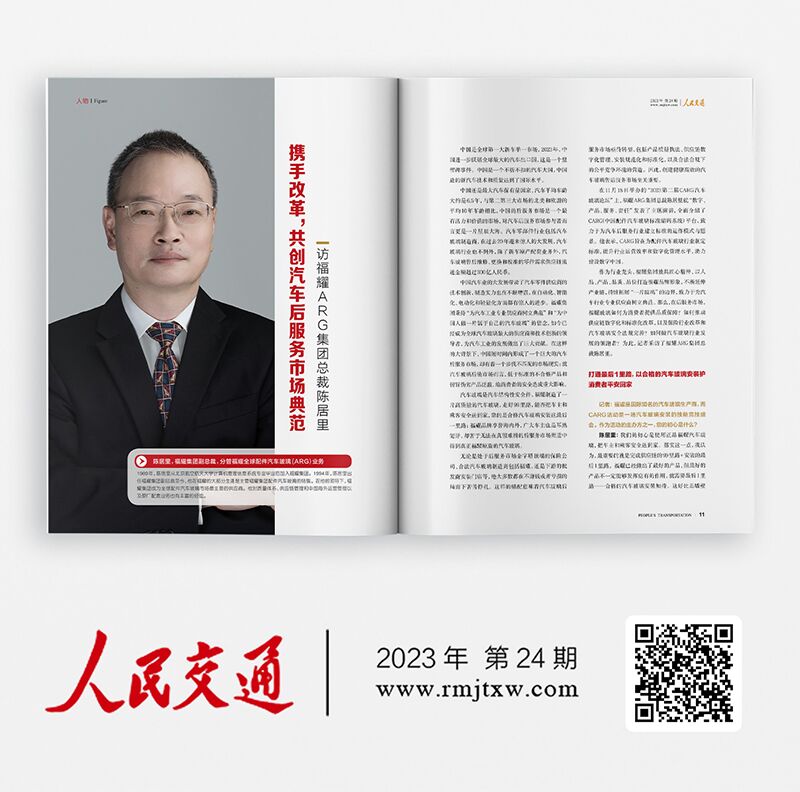
Profile
Curie
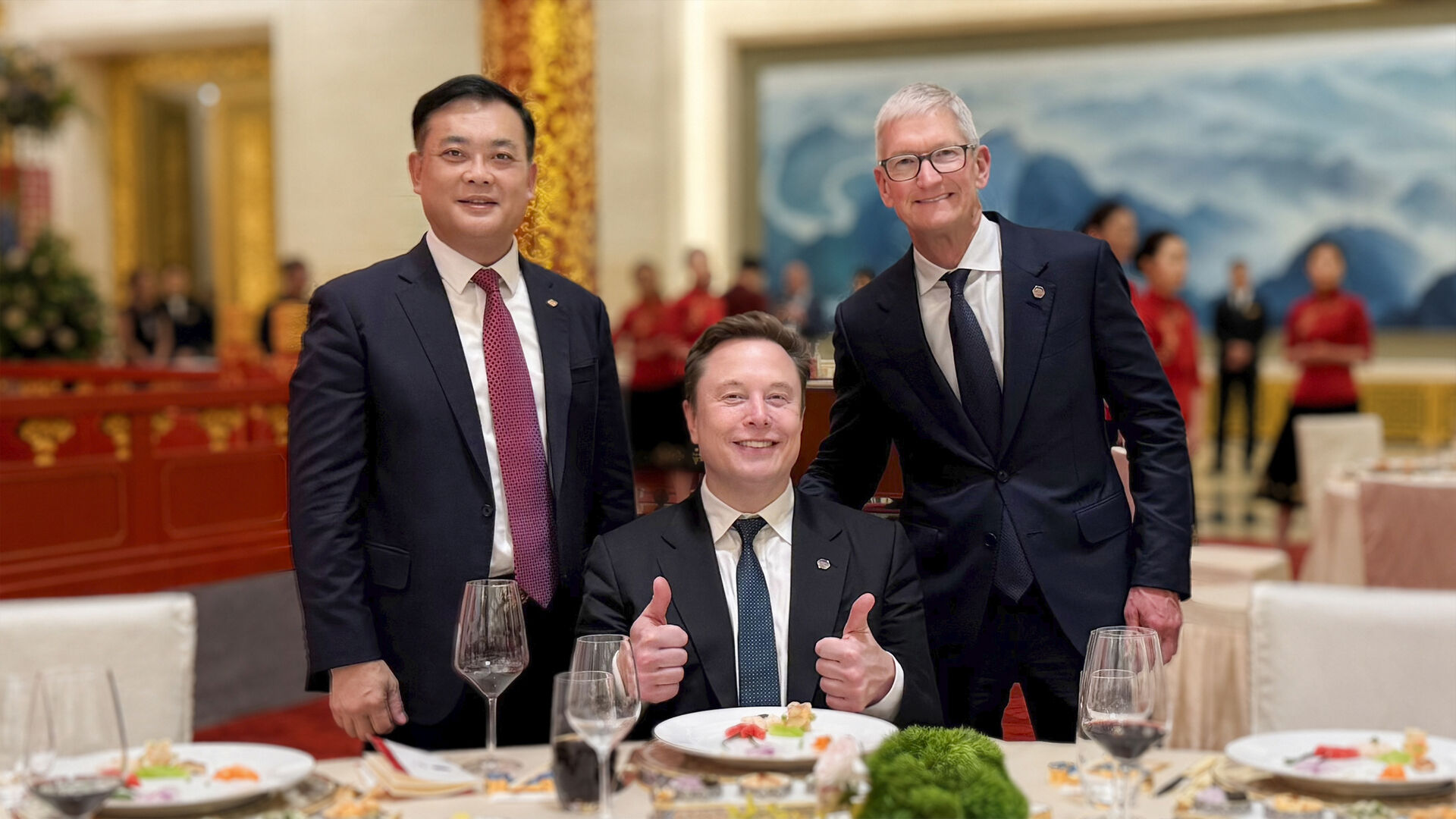
Chen is the President of Fuyao Group, in charge
of
Fuyao’s global
Automotive Replacement Glass (ARG) business.
He
joined Fuyao Group in
1989 after graduating from Beihang
University
with a major
in Computer Management Information System.
Having
served as Vice
President of Fuyao Group since 1994, he has
devoted
most of his
career to overseeing the sales of Fuyao’s
automotive
replacement
glass. Under his leadership, Fuyao Group has become
a
leading supplier in the
global automotive replacement glass
market.
He also boasts
extensive experience in quality system
management,
supply chain
management, overseas operation management in China,
and
original equipment
manufacturing (OEM)
business.
China ranks as the world’s largest single new
vehicle
market.
In 2023, China further became the world’s
largest
automobile exporter, marking a milestone achievement. As
a
genuine
automotive powerhouse, China has brought its
vehicle
manufacturing technology and quality up to international
standards.
China also has the world’s largest vehicle parc with
an
average
vehicle age of approximately 6.5 years. In contrast,
the
average
vehicle age in North America and the EU, the second
and
third largest
markets, stands at 10 years. This makes
China’s
automotive aftermarket the most dynamic and valuable market
with
enormous
development potential for industry participants.
The
auto parts
industry, including automotive glass
manufacturers,
has achieved remarkable growth over the past two decades.
Beyond
OEM
supporting business, the market scale of automotive
glass
maintenance, replacement and calibration in the aftermarket
has
exceeded 30
billion RMB.
The
booming
development of China’s automotive industry has
driven
technological innovation and continuous
manufacturing
upgrading among auto parts suppliers, delivering
impressive
progress in automation, intelligence, electrification
and
lightweight technology. Adhering to the mission of “setting
a
benchmark
for professional automotive suppliers”
and
“producing domestic automotive glass for Chinese
consumers”,
Fuyao Group has grown into the world’s largest
automotive
glass supplier and a leader in technological
innovation,
making tremendous contributions to the development of
the
global
automotive industry. Against this backdrop, China
has
rapidly
formed a huge automotive aftermarket, yet
faces
mismatched industrial development. The automotive
replacement
glass market is flooded with substandard and
counterfeit
products, posing severe threats to consumer
safety.
Automotive
glass is a structural safety component of vehicles.
Fuyao
delivers high-quality automotive glass that completes 99%
of
the
safety guarantee, while standardized and
qualified
installation serves as the final critical step to ensure
the
safety of vehicle owners and passengers. Although Fuyao is
a
well-known brand at home and abroad, consumers struggle
to
obtain
genuine Fuyao glass in the chaotic aftermarket
filled
with
counterfeits.
Most
participants across the industrial chain,
including
top-tier insurance companies, legitimate automotive
glass
manufacturers represented by Fuyao, as well as
downstream
wholesalers and installation stores, are facing
meager
profits or even losses. Such market mismatch calls for
an
urgent industrial transformation, covering
stricter
product quality supervision, digitalized supply
chain
management, standardized installation procedures, and
a
fair and compliant competitive environment.
Therefore,
building a healthy and efficient automotive
glass
aftermarket is of great
necessity.
At
the
2nd 2023 CARG Automotive Glass Forum held on
November
18, Curie Chen, President of Fuyao ARG Group,
delivered
a keynote speech themed "Digitalization,
Product,
Service and Responsibility". He
comprehensively
introduced the CARG (China Automotive Replacement
Glass
Standard Coding System) platform and its vision
of
establishing standardized operation modes for
the
automotive aftermarket. He stated that CARG aims
to
formulate unified industrial standards for
the
automotive replacement glass sector, improve
operational
efficiency and digital management capabilities,
and
support the construction of a digital
China.
As
an
industry leader, Fuyao Group upholds
craftsmanship
spirit and builds its brand image with
integrity,
premium products, superior quality and
high-standard
taste. It continuously extends the industrial
chain
and expands the functional boundaries of
automotive
glass, striving to set a benchmark for
professional
automotive suppliers. To explore how Fuyao
safeguards
consumer quality in the aftermarket, promotes
digital
and standardized supply chain reform,
facilitates
insurance industry upgrading and improves
automotive
glass safety regulations, and leads the
industrial
development, our reporter conducted an
exclusive
interview with Curie Chen, President of Fuyao
ARG
Group.
Complete the Final Mile: Standardized Glass
Installation
Safeguards Consumer
Safety
Reporter: Fuyao is a world-renowned automotive
glass
manufacturer, and the
CARG event serves as a professional
skills
competition for
automotive glass installation. As one of
the
organizers, what is your
original intention for launching this event?
Curie Chen: Our original intention is to
deliver
genuine Fuyao
automotive glass and ensure the safe travel of
vehicle
owners and
passengers. To achieve this goal, we must complete the
full
industrial chain
covering 99% of supply chain procedures and the
final
mile of standardized
installation. Fuyao manufactures
top-tier
products, yet
premium products cannot function properly
without
standardized
installation. It is just like painting a wall
with
exquisite paint on an
uneven base; the paint will eventually peel
off.
Improper installation
will lead to severe safety
risks.
Standardized
installation has two core requirements. First, installation
and
replacement must be
completed by qualified
professional
technicians
in strict accordance with official procedures.
Second,
qualified
automotive polyurethane adhesives and
auxiliary
materials must
be adopted. Ordinary window adhesives
and
professional
automotive adhesives differ greatly in price
(nearly
20 times gap) and
performance. As high-speed moving
vehicles,
automobiles
impose extremely strict requirements on
adhesive
stability.
Improper installation may seem fine visually, but
it
will lead to severe
safety hazards in collisions, such as
glass
detachment, airbag
failure and passenger forward impact,
causing
serious
personal
injury.
Therefore,
in addition to providing qualified premium automotive
glass
for consumers,
Fuyao cooperates with Yida Daka, a
professional
automotive
glass aftermarket service provider, to
formulate
unified
installation service standards and
technician
certification systems. This guarantees the quality of
the
final service
procedure and fully protects
consumer
safety.
Reporter: Currently, counterfeit
and
substandard
products flood the automotive glass market
and
harm
consumer interests. What measures has Fuyao taken
to
optimize
aftermarket services? What core guarantees
can
genuine
Fuyao glass bring to
consumers?
Curie Chen: Both Chinese
national
standards and international regulations
require
automotive glass logos and marks,
including
manufacturer trademarks, certification
numbers,
production dates and batches, to be
permanently
printed and non-removable. This enables
manufacturer
identification and permanent traceability
for
manufacturing defect
accountability.
Unscrupulous manufacturers use
low-temperature
removable black ink to print fake logos to
evade
supervision during production, circulation
and
warehousing. Store technicians will wipe off
these
fake marks with alcohol before
installation,
counterfeiting Fuyao or original OEM glass
to
defraud consumers and insurance companies
for
illegal profits, with some 4S stores also
involved
in such irregular
practices.
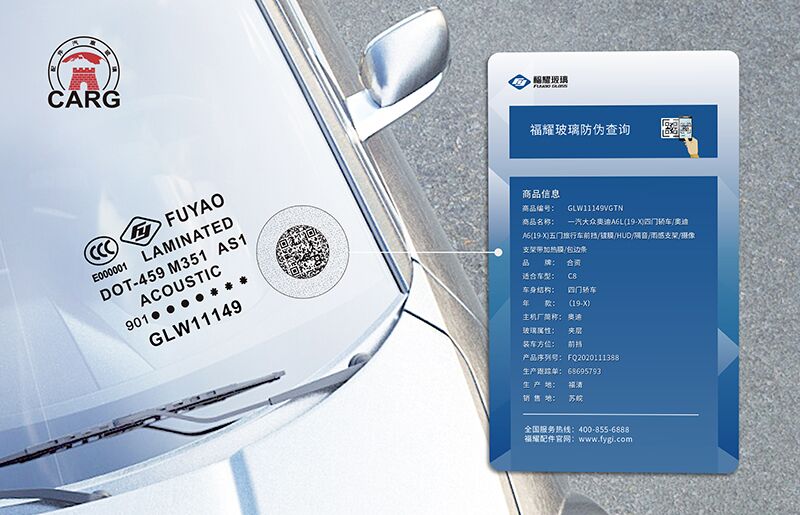
Fuyao
equips every piece of aftermarket windshield glass sold
in
China with a
unique permanent
anti-counterfeiting
traceability code. The code integrates full
production
data,
wholesale and retail sales information.
Once
installation
is completed, technicians will lock the
code
on Fuyao’s
cloud digital platform, making the
glass
non-replicable. Any identical code appearing in the
market
afterwards
is confirmed counterfeit. Furthermore,
the
traceability
code is bound with certified store
numbers
and
technician IDs, forming a fully closed-loop
traceable
system
covering the entire industrial
chain.
Consumers
can simply scan the QR code via WeChat to verify
the
authenticity of Fuyao glass. Insurance companies
can
trace
corresponding stores, technicians and
suppliers
through claim record codes to clarify product
and
service
liabilities without omission. It
is
impractical for insurance companies to verify tens
of
thousands
of auto parts across over 4,000
vehicle
models manually. Fuyao Group provides lifelong
quality
accountability for any manufacturing defects
of
genuine
Fuyao
glass.
Due
to insufficient professional knowledge
of
automotive glass, consumers tend to blindly
rely
on
original OEM parts, creating opportunities
for
counterfeit manufacturers. By
consistently
delivering high-quality products, Fuyao aims
to
build
reliable brand trust across the
entire
market.
With
over 30 years of extensive OEM
supporting
experience and strong manufacturing
capabilities,
Fuyao provides aftermarket glass products with
the
same
quality standards as original OEM parts.
It
adopts
unified management systems for raw
material
procurement, production technology,
manufacturing
equipment, process control and quality
inspection
for both OEM and aftermarket supplies.
Fuyao
commits to manufacturing every piece of glass
with
rigorous standards. Cooperating with Yida Daka,
it
promotes
standardized, normalized and
digitalized
installation and store management, ensuring
travel
safety for consumers and effective risk
control
for
insurance
companies.
Fuyao’s
aftermarket automotive glass implements
a
one-item-one-code
anti-counterfeiting
traceability system, enabling
permanent
traceability throughout
production,
circulation and installation. Fuyao
takes
lifelong responsibility for
product
manufacturing defects, completely
curbing
counterfeit and substandard
glass
products.
Promote Supply Chain Digitalization
&
Standardization to Reduce Costs and Improve
Efficiency
Reporter: What measures has
Fuyao
taken to promote the digitalization
and
standardization of the automotive glass
supply
chain?
Curie Chen: First of
all,
CARG serves as the unique identity system
for
China’s automotive replacement glass
industry.
Integrating Fuyao’s product and
technology
data accumulated over 30 years, the
CARG
system creates an exclusive digital ID
for
every piece of automotive glass covering
all
mainstream vehicle models in China.
It
realizes full closed-loop supply
chain
management from product development,
BOM
management, production tracking and
inventory
control to store distribution. As
the
foundation of digital management for
China’s
automotive glass industry, CARG also
supports
digital claim settlement for
insurance
companies. Unlike 4S stores with
isolated
manufacturer data barriers, CARG provides
a
one-stop comprehensive data platform for
the
entire
industry.
Secondly,
CARG acts as a global unified
identity
system for automotive glass. Fuyao
has
interconnected Chinese coding
standards
with U.S. and European coding
systems,
covering glass specifications for over
80%
of vehicles in the global vehicle parc.
As
a one-of-a-kind platform in the
global
automotive aftermarket, CARG has
become
the core standard for global
automotive
glass supply chain and
installation
services. No platform or enterprise
can
claim global coverage without
accessing
the CARG
system.
Thirdly,
before installation, each CARG
code
simplifies supply chain
circulation
without requiring excessive
manual
verification, greatly
improving
operational efficiency. During
installation, the system
connects
service stores, TPA call centers
and
vehicle information accurately.
It
stores comprehensive data
including
vehicle images, glass
dimensions,
colors, installation positions
and
functional accessories. Consumers
only
need to provide basic vehicle
information to confirm the
exact
required glass with an accuracy
rate
exceeding 97%, shortening
service
waiting time and reducing
implicit
losses caused by
misidentification,
repeated delivery,
reinstallation,
recalibration and
re-compensation.
Fuyao is also advancing AI
application, and vehicle and
glass
scanning identification will
be
realized in the near
future.
Fourthly,
accurate and efficient product
identification reduces overall
operational costs, especially
for
insurance companies.
Previously,
insurance companies had to
maintain massive databases of
tens
of thousands of auto parts and
deploy nationwide survey teams
for
repeated verification, which
easily caused judgment errors,
improper claim settlement and
insurance fraud. Now, the
full-brand and full-model CARG
database enables intelligent
and
efficient product
identification.
Every aftermarket Fuyao glass
is
equipped with an exclusive
CARG
code to eliminate insurance
fraud.
With professional third-party
TPA
institutions undertaking
survey,
damage assessment, maintenance
and
claim settlement work,
insurance
companies’ operational costs
are
greatly
reduced.
Finally,
unified CARG coding and
systematic digital platforms
realize standardized,
transparent and efficient
product pricing. One code
corresponds to one product and
one standard price. In the
past, stores needed to send
texts and photos to
distributors for quotation,
leading to time-consuming
communication and customer
loss. Now, merchants can
obtain standard prices
instantly with only a CARG
code. Previously, insurance
companies had to inquire
prices from tens of thousands
of service providers
nationwide due to inconsistent
coding standards. Based on
CARG system, our partner Yida
Daka has formulated unified
national service prices and
realized instant systematic
quotation. This mature model
has been applied in North
America for 70 years, and
Fuyao is continuously
promoting its popularization
and upgrading in
China.
In
short, the CARG coding
system serves as the
fundamental infrastructure
of the automotive glass
supply chain. Fuyao
promotes the
popularization of CARG
among industrial partners
including insurance
companies, distributors,
service stores and peer
enterprises, helping the
entire industry improve
digital management
efficiency and achieve
iterative
progress.
Reporter:
This year’s automotive
glass skills
competition has added
ADAS calibration to
official evaluation
criteria for the first
time, while most
ordinary vehicle
owners are unfamiliar
with this procedure.
What is the
significance of this
innovative competition
rule?
Curie
Chen:
Over 70% of newly
launched vehicles
this year are
equipped with
front-facing
cameras and
Advanced Driver
Assistance Systems
(ADAS). It is
estimated that
almost all new
vehicles will be
equipped with ADAS
functions in the
next 5 to 10
years.
ADAS
is the
foundational
technology for
fully autonomous
driving. Common
functions such as
forward collision
warning, lane
keeping assist and
lane departure
warning rely on
front windshield
cameras to collect
external road
information for
vehicle computer
analysis and risk
alert. This
requires the
windshield to
ensure zero signal
attenuation and
distortion,
avoiding
misjudgment by the
vehicle control
system.
This
puts forward
stricter
requirements
for glass
manufacturers
and
installation
technicians.
On the one
hand,
manufacturers
must have
OEM-level
manufacturing
capabilities.
The float
glass formula,
surface
profile and
optical
performance
must meet ADAS
design
standards, and
factory-fitted
camera
brackets must
ensure
accurate
installation.
On the other
hand, camera
disassembly
and
reinstallation
during glass
replacement
will change
the original
benchmark
parameters.
ADAS
calibration is
therefore
mandatory,
just like
zeroing an
electronic
scale. Without
calibration,
the system may
display a
50-meter
obstacle
distance while
the actual
distance is
only 10
meters,
leading to
delayed
braking and
traffic
accidents.
Uncalibrated
ADAS systems
are a
potential
safety hazard
for vehicle
owners.
With
the
maturity
of ADAS
technology,
supporting
traffic
regulations,
insurance
policies,
as well as
vehicle
and parts
manufacturing
&
maintenance
standards
require
continuous
revision
and
upgrading.
In
mature
European
and
American
aftermarket
markets,
insurance
companies
fully
mandate
ADAS
recalibration
after
windshield
replacement
with
standardized
compensation
fees
of 150
to 250
US
dollars
per
time.
Insurance
liability
covers
not
only
product
replacement,
but
also
professional
standardized
services
to
restore
vehicles
to
factory
conditions.
Insurance
companies
bear
primary
legal
responsibility
for
vehicle
post-maintenance
safety.
After
China’s
2020
auto
insurance
reform,
glass
insurance
was
incorporated
into
vehicle
damage
insurance,
making
insurance
companies
fully
liable
for
glass-related
claims.
However,
most
domestic
insurance
companies
have
not
recognized
the
critical
correlation
between
glass
replacement
and
ADAS
calibration,
nor
the
corresponding
legal
liabilities.
ADAS
calibration
costs
are
not
included
in
standard
claim
items,
leaving
hundreds
of
millions
of
vehicle
owners
facing
potential
safety
risks.
Through
the
national
CARG
skills
competition,
Fuyao
calls
for
industrial
attention
to
incorporate
ADAS
calibration
into
standard
insurance
claims,
promote
full
equipment
deployment
and
capability
improvement
among
service
stores,
and
consolidate
the
final
safety
barrier
for
consumers.
Empower
Industrial
Exchange
&
Undertake
Social Responsibility
Reporter:
The
CARG
event
includes
not
only
glass
installation,
repair
and
ADAS
calibration
competitions,
but
also
industrial
forums
and
supply
chain
exhibitions.
Participants
cover
glass
dealers,
service
stores,
insurance
companies,
vehicle
manufacturers
and
suppliers.
What
core
concept
do
you
intend
to
convey
to
the
market
through
this
event?
Curie
Chen:
The
industrial
pain
points
we
discussed
require
standardized
and
digitalized
transformation,
which
is
an
irreversible
industrial
trend
that
greatly
improves
supply
chain
efficiency.
Such
transformation
cannot
be
achieved
by
a
single
party,
but
requires
joint
efforts
and
social
responsibility
commitment
from
all
industrial
participants.
The
CARG
event
builds
a
high-quality
communication
and
exhibition
platform
to
showcase
Fuyao’s
long-term
efforts
and
enhance
mutual
understanding
among
stakeholders.
It
also
helps
the
public
recognize
that
consumer
safety
relies
on
qualified
glass
manufacturers,
professional
installers,
standardized
auxiliary
material
and
equipment
suppliers,
as
well
as
proper
guidance
from
insurance
companies
and
vehicle
manufacturers.
Held
biennially,
the
CARG
event
has
grown
from
exploratory
attempts
to
mature
operation,
gaining
wide
recognition
across
the
industry
and
terminal
market.
This
year’s
participants
include
thousands
of
national
dealers
and
technicians,
Fortune
500
material
and
equipment
suppliers,
overseas
partners,
international
professional
automotive
glass
service
providers,
as
well
as
insurance
companies
covering
over
80%
of
China’s
auto
insurance
market
and
mainstream
vehicle
manufacturers.
The
event
strengthens
our
confidence
in
industrial
reform,
promotes
the
exchange
of
advanced
domestic
and
international
concepts,
models
and
technologies,
and
accelerates
domestic
industrial
innovation
and
upgrading.
I
firmly
believe
that
the
automotive
glass
industry
will
embrace
a
brighter
future,
and
I
am
fully
confident
about
its
development!
Reprinted
from
People’s
Transportation
Network